
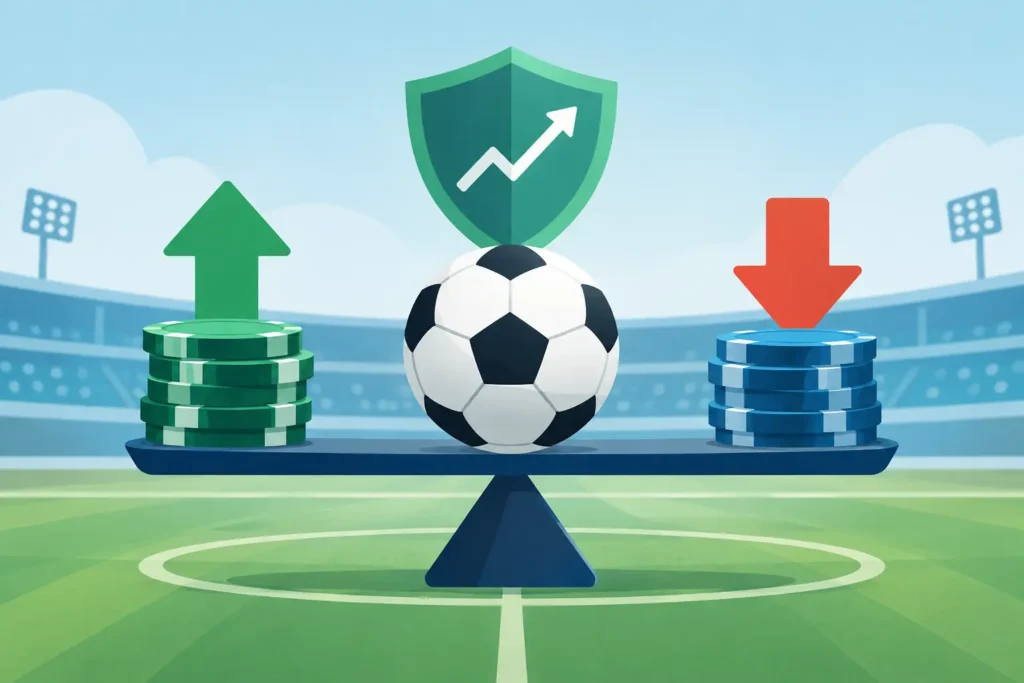
A 2-0 lead after 65 minutes should feel good. But when your pre-match bet still needs one more goal, or your accumulator is one result away from paying big, confidence can turn into panic quickly. Hedging soccer bets is the tool bettors use to reduce that pressure. Used correctly, it can secure a profit or cut exposure. Used emotionally, it can destroy the value that made the original bet worth taking.
Football betting is mathematics, not a guessing contest. A hedge is not automatically smart because it guarantees something back. The only question that matters is whether the price of reducing risk is justified by the new information on the field and the likely value of your remaining position.
What Hedging Soccer Bets Actually Means
Hedging means placing a second wager that offsets all or part of your original bet. The new wager takes the opposite side, or a closely related outcome, so that more than one final result returns money.
Say you backed Arsenal to beat Chelsea at +180 before kickoff for $100. Arsenal takes a 1-0 lead early, and the live moneyline drops sharply. You may decide to place a bet on Chelsea or the draw, depending on the prices available. If Arsenal wins, your original ticket pays. If they fail to win, the hedge softens or removes the loss.
This is different from cashing out. Cash out is a sportsbook offer, usually priced with a built-in margin that favors the book. Hedging lets you calculate your own position and choose a market that fits it. The trade-off is that it takes discipline, fast calculation, and access to a reasonable live price.
When a Hedge Makes Sense
The best hedge is planned before the match begins. That does not mean you must always use it. It means you know what event would change your risk tolerance or your reading of the bet.
A hedge can be sensible when a live match creates a major change in probability that the original ticket did not anticipate. A red card, a key injury, a tactical collapse, or a match that becomes completely one-sided can all justify reassessing. If your team is protecting a fragile lead with 10 men for 35 minutes, holding a full win-only position may no longer match the reality of the game.
It also makes sense in certain accumulator situations. Perhaps you have already won four legs of a five-leg ticket and the final game has moved your way. Locking in a defined profit can be rational, especially when the remaining match represents a large share of your bankroll. The fact that the original bet was an accumulator does not make the final leg sacred.
Still, do not hedge simply because a bet is winning. A favorable scoreline is supposed to be part of a winning football bet. If you backed over 2.5 goals and the match is 2-0 after 30 minutes, you do not need to rush into an under bet just because the profit looks close. First ask whether the live odds reflect a genuine shift in match conditions or only the obvious fact that goals have already been scored.
The Cost of Certainty
Every hedge has a cost. Sportsbooks build margin into both sides of a market, and live betting margins can be wider than pre-match prices. When you hedge too often, you may be paying that margin repeatedly just to feel safer.
That is why bettors who hedge every position often end up with many small wins and weak long-term returns. They mistake reduced volatility for profitability. It feels good to avoid losses, but a strategy that constantly cuts the upside of positive expected-value bets can slowly drain a bankroll.
The right goal is not to win every ticket. It is to make better decisions over a large sample of bets. If your original selection was based on strong team news, form data, market value, and odds that were too high, do not abandon it without a real reason.
How to Calculate a Simple Hedge
Before placing the second wager, write down three numbers: your original stake, the possible profit from the original ticket, and the odds available on the hedge. Then decide what result you want.
For a simple two-outcome market, a basic full-hedge formula is:
Hedge stake = potential profit from the original bet divided by decimal hedge odds
Imagine you bet $100 at decimal odds of 3.00. Your potential profit is $200. Later, the opposite outcome is available at 2.00. A $100 hedge would return $200 total if the original bet loses, covering your hedge stake and leaving you even overall. If the original bet wins, you receive $300 from the first bet but lose the $100 hedge, leaving a $100 total profit.
In soccer, however, most markets are three-way. The home win, draw, and away win must all be considered. Hedging a moneyline position with only one opposing outcome may leave you exposed to the other. For example, backing the draw against a home-win ticket does nothing if the away team wins.
This is where related markets can help, but they must be handled carefully. A draw-no-bet wager, double chance, both teams to score, or goal total may reduce risk without covering every result perfectly. These are partial hedges, not magic protection. Always map out the payout for each possible final outcome before you confirm the bet.
Use Match Data, Not Fear
Live soccer betting moves fast, but the score alone is never enough. A 1-0 lead can be dominant or extremely lucky. Look at shots, dangerous attacks, expected goals when available, possession with purpose, set-piece pressure, substitutions, and the state of the match.
If a favorite leads 1-0 but has been outshot 13-3, is losing midfield control, and has just lost a defender to a second yellow card, a hedge has a logical foundation. If that same favorite leads 1-0, has created the better chances, and is controlling tempo, hedging may simply be a reaction to nerves.
The same rule applies to goals markets. A 0-0 halftime score does not automatically make an under bet safe. Some matches are scoreless because both attacks have failed. Others are scoreless despite open football, missed big chances, and repeated box entries. The scoreboard reports what happened. Good betting analysis explains what is likely to happen next.
Set Hedge Rules Before You Bet
The most reliable bettors do not decide everything in the heat of a match. Set rules that fit your bankroll and betting style before your selections kick off.
You might decide never to hedge a single pre-match bet unless there is a red card, an injury, or a clear tactical change. You may decide to hedge only accumulator final legs when the potential payout exceeds a certain portion of your bankroll. Or you might take partial profit whenever a live price creates an unusually favorable risk-free position.
The exact rule depends on your strategy, but consistency matters more than chasing the perfect decision. Record every hedge alongside the original bet: opening odds, live odds, match minute, reason for the hedge, and final result. After 30 or 50 examples, you will see whether your hedging improves results or merely reduces your comfort level.
Common Hedging Mistakes That Hurt Bettors
The first mistake is hedging a bet with no plan. Clicking the opposite side because the match feels dangerous is not strategy. It is an expensive emotional response.
The second is ignoring all outcomes in a three-way market. A draw hedge against a home win can look safe until the away team scores late. Know exactly where your money is exposed.
The third is staking too much on the hedge. If you over-hedge, you can turn a strong original value bet into a guaranteed loss. Check the complete payout table before placing the wager, especially when using same-game or related markets.
Finally, avoid using hedging to rescue weak picks. If a bet was poorly researched from the start, adding more money during the match rarely fixes the decision. Better selection comes first. Tipforwin focuses on disciplined football analysis because good entries matter far more than clever exits.
A Better Way to Think About Risk
Hedging is a risk-management tool, not a requirement and not a shortcut to guaranteed profit. The strongest bettors accept that some good bets lose. They protect their bankroll by staking responsibly, taking value at the right odds, and changing course only when the match or the market gives them a sound reason.
Before your next live hedge, pause for 30 seconds. Calculate the outcomes, check whether the game state truly changed, and ask whether you are protecting value or paying for reassurance. That small habit can keep your football betting disciplined when the final minutes get loud.